
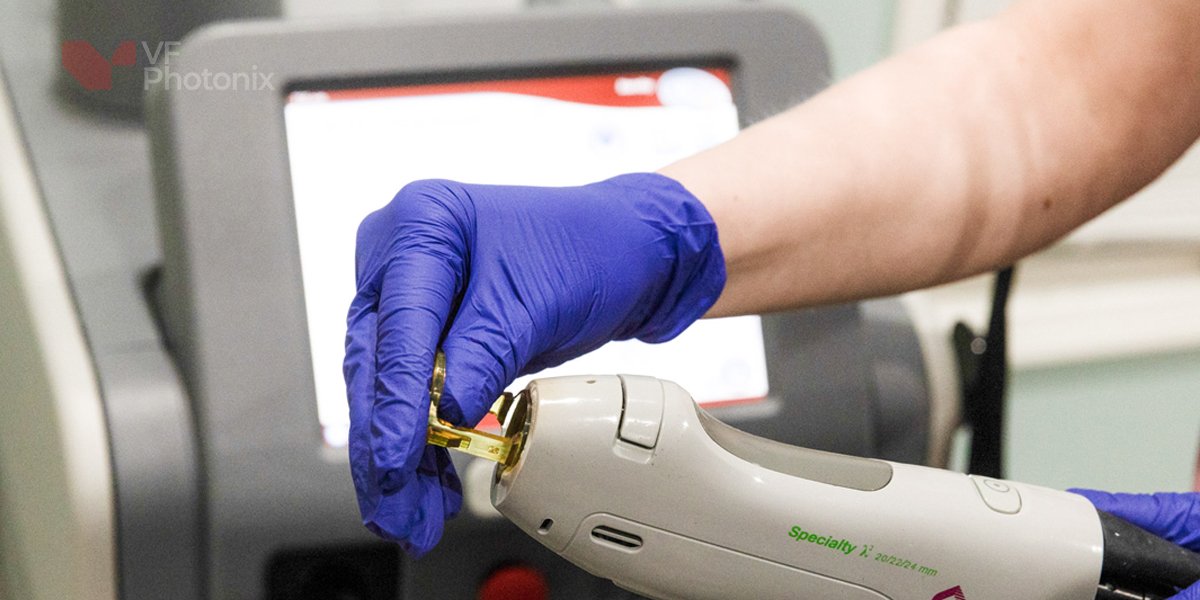
An unreadable label can turn a straightforward purchase into a chain of uncertain emails. The clinic knows which machine needs attention, the purchasing team has a photograph, and the distributor has several plausible catalogue entries. Nobody yet has enough evidence to authorise the order.
Laser spare part identification in this situation starts with organising what is known. A useful enquiry connects the equipment, the component and the records that support the proposed match. It also makes missing information visible, so a guess does not quietly become a purchasing instruction.
This guide explains how distributors, biomedical engineers and equipment managers can build that evidence pack. It covers purchasing preparation, not fault diagnosis or internal servicing. Any access to internal parts, measurements or technical assessment belongs with appropriately qualified service personnel following the equipment manufacturer’s procedures.
Start with the equipment record
Give the enquiry a unique reference and record the exact equipment model as written in the asset register or manufacturer documentation. Include the relevant serial number and revision information where available. A brand name alone leaves too many possibilities open, especially when a business supports several generations of equipment.
Identify the particular unit involved. Two machines with similar names can have different histories, assemblies or approved configurations. If a clinic operates several systems, use its internal asset number alongside the manufacturer’s identification. This helps purchasing and engineering discuss the same machine throughout the enquiry.
Separate confirmed information from assumptions. For example, an entry copied from an old spreadsheet should be marked as an unverified record until someone checks its origin. Clear uncertainty is useful; an apparently complete form containing invented detail is not.
Describe the purchasing requirement without diagnosing the fault
Explain whether the enquiry concerns an engineer-specified replacement, a stock replenishment or an identification question. Those are different requests. If the component has not yet been identified through a technical assessment, state that explicitly and ask what further records would help.
Avoid turning a symptom into a component order. A report of reduced output, for instance, does not establish which spare part is required. The procurement team’s role is to source the approved requirement after the responsible technical professional has assessed the equipment.
Where an engineer has already specified a replacement, attach the relevant purchasing instruction or approved extract. Preserve its wording and reference. Rewriting a precise instruction as a shorter product nickname can remove the very information the supplier needs.
Collect evidence that can be reviewed remotely
Start with existing records before requesting new photographs. Useful material may include previous purchase orders, receiving records, packaging labels, service reports and an applicable parts-list reference. A historic invoice can provide a lead, but its description should be checked against the equipment’s current configuration.
Ask the technical team for photographs already available from authorised service activity. Where further images are appropriate, request an overall view, visible markings and relevant connection details. Do not ask clinic staff to open equipment or remove parts for the purpose of obtaining a quotation.
Label every image with the enquiry reference and a plain description. Distinguish photographs of the installed component from pictures of a spare in storage or an image copied from a website. Otherwise, several visually similar items can become mixed in the same email thread.
Keep image evidence in its proper role
A photograph can help someone read a marking or notice a different connector. It cannot independently establish optical specifications, electrical suitability or manufacturer origin. Treat it as one piece of evidence rather than a complete identification method.
Keep original image files when possible. Cropped screenshots may hide suffixes or context. If a marking is partly unreadable, transcribe only what is legible and indicate the uncertain characters. Do not complete the reference by choosing the nearest catalogue result.
Build a source record for each possible reference
When several records suggest different part numbers, place them in a simple comparison list. For each candidate, record where it came from, which equipment it relates to, and who can verify it. This makes the disagreement concrete enough to resolve.
A number on packaging might identify an assembly, while another number identifies one component within it. An internal warehouse code might refer to neither manufacturer’s catalogue. Ask the responsible engineer and supplier to explain the relationship rather than treating the numbers as interchangeable aliases.
Maintain a clear status for each candidate: awaiting evidence, rejected, or approved for the stated requirement. Once a reference is rejected, retain the reason. That prevents another colleague from reopening the same unsuitable option when the enquiry is handed over.
Ask for the basis of a proposed match
When a supplier proposes a component, ask which evidence supports the proposal. Useful answers may refer to an applicable drawing, a documented cross-reference or the equipment-specific information supplied by your engineer. A general statement that a part is suitable for a brand is insufficient.
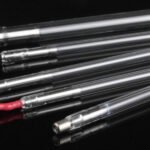
For flashlamps, Excelitas publishes product tables that distinguish dimensions, arc length, electrical ratings, gas and assembly type. These are examples of why physical resemblance is only part of the enquiry, not a compatibility decision. See the manufacturer’s high-power flashlamp documentation.
For other component categories, ask the engineer which specification fields are necessary. Do not borrow lamp criteria for an optical fibre or mirror. The purpose is to obtain the applicable evidence for the requested part, not to create a universal checklist of technical values.
Resolve gaps before requesting final approval
Give each missing item an owner. Purchasing may need the delivery destination; engineering may need to verify a revision; the supplier may need to identify the offered configuration. A short action list is easier to manage than repeatedly forwarding the entire enquiry.
Use explicit questions. Instead of asking whether everything looks correct, ask whether the proposed reference is approved for the identified machine and configuration. If the answer depends on another document, record that dependency and keep the line unapproved until it is resolved.
An urgent requirement can justify faster communication, but it does not make incomplete evidence sufficient. Tell the supplier the required date and the consequences of delay without converting a requested date into an assumed delivery commitment.
Turn the approved evidence into a reusable record
After identification is resolved, create a controlled purchasing record. Include the approved manufacturer and reference, the equipment scope, the configuration, the evidence location and the person who authorised it. State any limits to that approval, including relevant revisions or asset groups.
Link the eventual purchase order and receiving record to the same enquiry reference. This lets the warehouse compare what arrived with what was approved. It also gives the next buyer a reliable starting point while preserving the need to check whether anything has changed.
Do not expand one successful purchase into a brand-wide compatibility claim. If the same component is proposed for another machine, verify that application separately. An identification record should describe the actual decision that was made, not a broader conclusion nobody reviewed.
A buyer checklist for missing part numbers
- Record the exact equipment model, asset number and relevant revision.
- State whether the requirement is technically approved or still under investigation.
- Gather existing service, purchasing and packaging records.
- Identify the source and context of every photograph.
- Mark unreadable characters and unknown fields honestly.
- Separate component references, assembly references and internal stock codes.
- Request the evidence supporting any proposed replacement.
- Assign outstanding questions to named owners.
- Obtain approval for the stated equipment and configuration.
- Preserve the decision with the quotation and receiving record.
For distributors, add the end customer’s approval route. Your sales team may receive an enquiry from a purchasing contact who cannot authorise technical substitutions. Establish who can answer the equipment questions before an alternative is presented as ready to order.
Frequently asked questions
Can I request a quotation without a readable part number?
Yes, but explain that identification is incomplete. Provide the equipment details and available records, then ask what additional evidence is needed. A supplier may be unable to finalise a quotation or confirm a proposed match until those gaps are resolved.
Is a previous purchase order enough to identify the component?
It is a useful starting point, particularly if linked to the same asset. Check whether the earlier item was received and approved, and whether the equipment configuration has changed. A historical description alone does not establish the current requirement.
Should I send a physical sample immediately?
First agree whether a sample is needed, how it would be assessed and who would arrange its transfer. Do not assume a supplier provides sample identification or testing. Keep any removal and handling decisions with the responsible technical team.
What should I do if two suppliers suggest different references?
Request the basis of each proposal and compare the stated scope and configuration. Have the responsible engineer resolve the difference using applicable documentation. A lower price or faster response does not determine which reference is correct.
Prepare an identification enquiry for VF Photonix
Use our product categories to identify the relevant enquiry area, such as optical fibres, mirrors, lenses or flashlamps. For lamp-specific questions about manufacturer identity, also consult our existing original Excelitas flashlamps guide.
Contact VF Photonix with your equipment model, available references, supporting records, required quantity and delivery country. Clearly flag anything that remains unverified. That gives the enquiry a defined starting point and allows the proposed component and quotation scope to be discussed accurately.